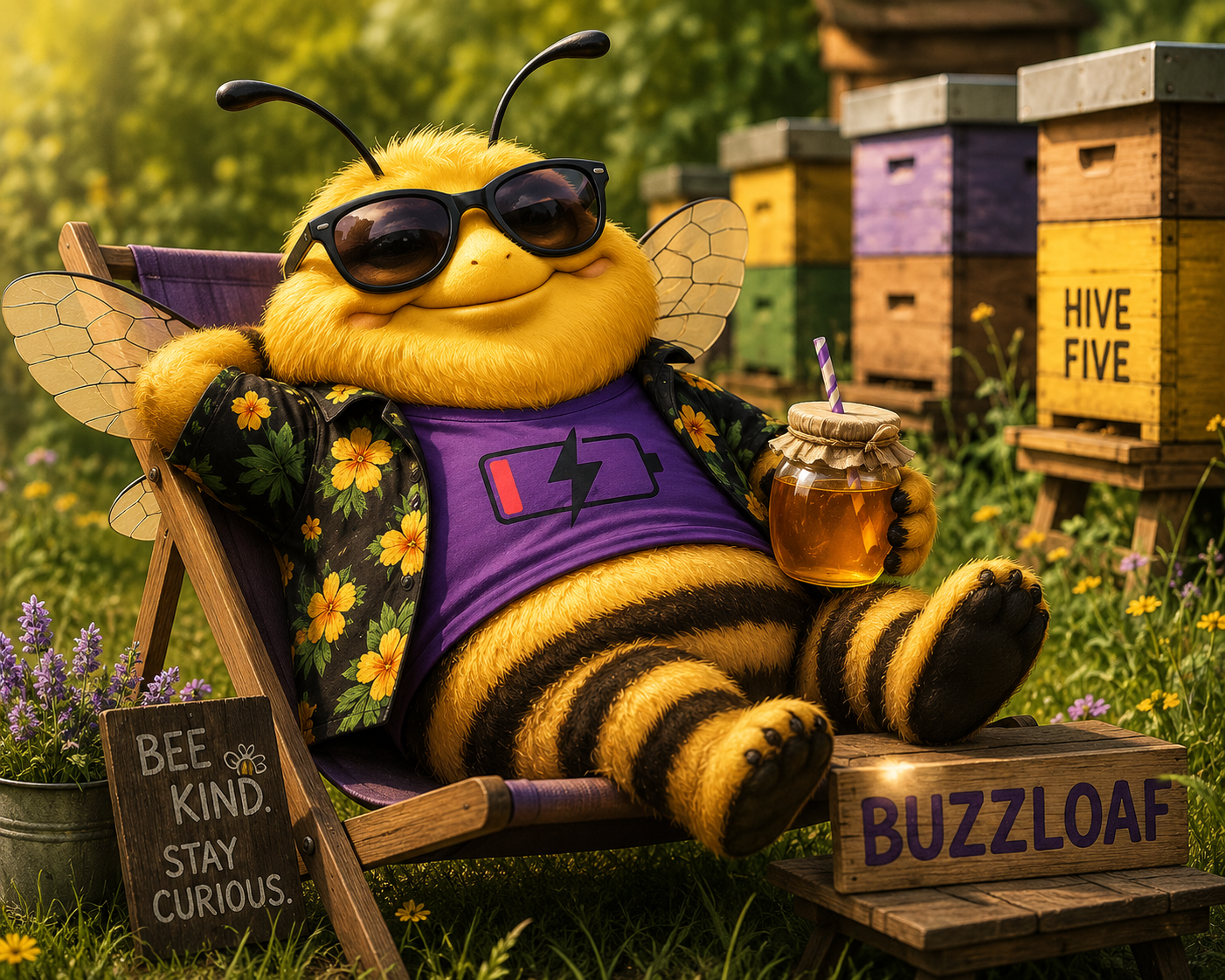
The Bees Are Preparing. Erik Has Started Another Project.
Welcome to the October BeeBrief! September slipped past without a newsletter, but nobody told the bees or the humans to slow down. The hives are preparing for winter, the habitat restoration continues, and the Buzz Bros are discovering that being a drone may not be the long-term career opportunity they imagined.
Let’s catch up!
🌿 OPERATION THICKET BREACH: THE INVASIVES HAVE BEEN WARNED
🌿 OPERATION THICKET BREACH: THE INVASIVES HAVE BEEN WARNED
The battle against invasive plants at Putney Ridge continues, and we’re making real progress.
European buckthorn and other invasive species have been cleared from our target area, opening up space for a healthier habitat. The initial clearing work is largely complete, and we’re looking ahead to erosion control, additional restoration, and spring planting.
The next phase includes using salvaged wooden pallets to help manage the hillside. That project deserves its own video, because apparently clearing invasive plants wasn’t enough. Now we’re doing landscaping and erosion control, too.
We’re also preparing cardboard pots for wildflowers. The process is wonderfully simple: soak cardboard, roll it around a glass, let it dry, and voilà! Homemade planting pots ready for the next phase of the project. We’re preparing for cold-storage planting over winter so we can get more pollinator-friendly flowers established when the time is right.
The goal is bigger than clearing brush. We’re creating more room for native plants, pollinators, and a healthier landscape around the apiary.
The buckthorn has been warned. The chainsaw has been informed. The project manager remains unsupervised.**
Watch the latest Operation Thicket Breach video:
[Operation Thicket Breach: Lock & Load Buckthorn Has Been Warned]
And if you need a soundtrack for clearing the wilderness:
[HURRY UP AND CUT SOMETHING! 🎸 A Chainsaw Rock Anthem]
🐝 ELEVEN HIVES. ONE BIG WINTER PREP PROJECT.
We currently have 11 strong, active hives at Putney Ridge. That’s a solid place to be heading into the colder months, but autumn is when a beekeeper’s attention shifts from summer production to winter survival.
We’ve been reducing and consolidating colonies where appropriate, including condensing hives with multiple medium boxes. Smaller winter spaces can help colonies manage their resources, provided the setup matches the strength and needs of each colony.
We’ve also installed entrance reducers. These make the entrances smaller, helping colonies defend themselves against robbing bees and other opportunistic visitors. When food becomes scarce, a hive’s entrance can become a very busy front door.
The hive lids have received two-inch Styrofoam insulation, and we’ve made moisture quilts filled with sheep’s wool. Bees generate moisture as they metabolize their winter food, and condensation can become a problem when warm, humid air meets cold surfaces. A properly managed moisture quilt can help absorb moisture above the winter cluster. Ventilation and the overall hive setup still matter, because the goal is to manage moisture without creating other problems.
Winter preparation is a balancing act: enough food, a healthy population, protection from pests, and a hive environment that helps the bees get through the cold months.
The bees are doing their part. We’re trying not to make their job harder.
Putney Ridge Apiary has officially decided that wildflower habitat deserves some serious attention.
Enter: OPERATION THICKET BREACH
A beachhead on the other side of the apiary has been cleared in preparation for 2027 spring planting and habitat restoration.
Unfortunately, several invasive plants have been identified as occupying territory that we would prefer to give back to native plants and pollinators.
The list of suspects includes:
European buckthorn
Invasive bittersweet
Burning bush
Multiflora rose
Barberry
An all-out botanical war has been declared.
Videos documenting the operation are now appearing under the Operation Thicket Breach series on HiveMind, which can be viewed at putneyridgerawhoney.com, Youtube,.Instagram, Facebook and TikTok.
The objective isn't simply to clear land.
It's to create better habitat.
More native flowers means more forage for honey bees, bumblebees, butterflies, and the many other pollinators that call Putney Ridge home.
And speaking of pollinators...
🦠 OPERATION MITE FIGHT: THE WORK CONTINUES
Varroa mites remain one of the biggest challenges in modern beekeeping. These parasites weaken honey bees and can spread viruses that threaten colony health.
In August, we treated the hives with Formic Pro for two weeks. More recently, we used an oxalic-acid fuming wand powered by a lawn-mower battery. The wand is placed in the hive, the entrances are sealed according to the treatment procedure, and the treatment targets exposed mites.
Oxalic acid has an important limitation: it does not reliably reach mites protected beneath capped brood. That means treatment timing, monitoring, and following the approved product label are essential parts of responsible mite management.
There is no magic button that makes Varroa disappear forever. Effective beekeeping means monitoring mite levels, choosing appropriate treatments, and paying attention to colony conditions throughout the season.
Healthy bees don’t happen by accident. They take work, observation, and a little bit of stubbornness.
🎃 THE LAST FLIGHT: THE DRONES HAVE BEEN EVICTED
Autumn brings one of the stranger realities of honey bee life.
As resources dwindle and winter approaches, worker bees may drive drones, the male bees, out of the colony. Drones have a specific biological role, but they don’t help with the everyday work of gathering nectar, nursing brood, or maintaining the hive. When winter survival becomes the priority, the colony’s priorities change.
Naturally, this development has raised some concerns among the Buzz Bros.
A Special Report from Beetrice Buzzwing
Beetrice Buzzwing: The worker bees have begun evicting the drones as the colony prepares for winter. Sources confirm that the decision was made by the female workforce, and the male residents have been given no opportunity to appeal.
Buzzbee: Wait. We’re drones?
Buzzwell: Yes, Buzzbee. We’re drones.
Buzzloaf: I would like to point out that I have contributed enormously to this colony.
Bumble Bee Dundee: Name one contribution.
Buzzloaf: Morales
Buzzbee: You ate the evidence.
Buzzloaf: I was conducting a honey quality assessment!
Beetrice Buzzwing: This just in: the drones have filed a complaint. The complaint has been eaten.
Buzzloaf: I demand a severance package!
Buzzwell: You don't have a job.
Buzzloaf: Then I demand back pay!
Beetrice Buzzwing: Reporting live from the hive, where the drones are learning that winter employment opportunities are extremely limited.
Watch the full report:
[THE LAST FLIGHT: The Drones Have Been Evicted 🐝🎃]
For the record, Beetrice Buzzwing is a worker bee. The rest of the core Buzz Bros are drones, and they are taking this news about as well as you might expect.
🐝 THE YELLOW JACKETS HAVE FOUND THE LEFTOVERS
As summer flowers fade and natural food sources become harder to find, yellow jackets can become more noticeable around the apiary. They’re opportunistic scavengers, and a struggling or crowded food source can attract unwanted attention.
That’s one reason entrance reducers matter during this time of year. A smaller entrance gives the honey bees a more manageable area to defend against robbing and intruders.
We’ve been keeping an eye on the activity and helping the colonies prepare for the seasonal shift.
The yellow jackets, meanwhile, appear to have interpreted the situation as an invitation to an all-you-can-eat buffet.
[The Hive Leftovers: Yellow Jackets Found the Buffet]
🎵 🌳 THE ORCHARD, THE HOSTAS, AND THE COUPLES THERAPY
We’ve been clearing pine trees to make room for fruit trees that can provide additional value for pollinators. The orchard work also includes an apple tree intertwined with a cherry tree. Both trees are staying, but they’re beginning a three-year pruning plan to help them coexist more comfortably.
Basically, we’re putting the trees through couples therapy. So far, neither has filed for divorce.
We’ve also added hostas to the landscape, obtained through a honey trade. It’s a nice reminder that local honey can be more than something delicious on the kitchen table. It can also help build connections with other local growers and gardeners.
The hostas are planted, the fruit trees are getting attention, and the broader habitat restoration continues.
One project at a time, we’re working toward a landscape that offers more food and shelter for pollinators and more life around the apiary.
[A Little Honey, A Lot of Hostas 🌱 | Putney Ridge Apiary]
🦋 THE POLLINATORS ARE STILL PARTYING
Even as autumn settles in, the apiary has seen impressive activity from butterflies, bumblebees, and honey bees. It’s been encouraging to see so much life moving through the landscape.
Our goal is to extend that welcome by improving habitat, planting for pollinators, and making room for more flowering plants.
As the season changes, remember that a tidy garden isn’t always the most helpful garden. Leaving some plant stems and seedheads standing through winter can provide shelter for overwintering insects. Planning a native pollinator garden now can also make spring planting easier.
You don’t need a huge field to help. A few well-chosen plants, a little patience, and a willingness to leave some natural cover can make a difference.
And if you’ve ever wondered who’s showing up for lunch at Putney Ridge, we have footage.
[Who's Having Lunch at Putney Ridge? 🐝🦋]
[The Pollinator Buffet: Putney Ridge Apiary]
🏫 THE BUZZ BROS GO TO SCHOOL
One of the highlights of this stretch was a visit to Guilford Central School, where Putney Ridge Apiary presented to more than 100 students in grades K–6.
That’s a lot of young minds, a lot of bee questions, and a wonderful opportunity to talk about honey bees, pollination, and the importance of these remarkable insects.
Education is an important part of helping the next generation understand the natural world around them. When kids get to learn about bees, the conversation can reach far beyond the classroom and into gardens, backyards, and family dinner tables.
Of course, the Buzz Bros had questions of their own. We wouldn’t expect anything less.
[Putney Apiary Visits Guilford Central School: The Buzz Bros Have Questions]
🎬 THE HIVE HAS GONE MULTIMEDIA!
If you thought the bees were busy, wait until you see the video lineup. We’ve been documenting the apiary, following the seasonal changes, and letting the Buzz Bros investigate the questions that probably should have been left alone.
Here’s the latest batch of HiveMind videos. Pick a favorite, share one with a friend, and keep an eye out for the next installment.
🐝 Life Around the Apiary
- [Bee Drama 🐝 Some Things Are Better Left Unexplained]
- [I Have Questions: When Bees Swarm the Wrong Bee]
- [The Bees Have Another Entrance]
🖖 Buzzloaf and the Continuity Division
The Buzz Bros have launched an investigative unit to deal with questions of continuity, suspicious events, and possible violations of the laws of bee storytelling.
Whether this division will solve anything remains under review.
- [🐝🖖 BUZZLOAF'S CONTINUITY DIVISION: CASE #001]
- [Who Built Data First? 🤖🐝 Continuity Division]
🍯 Honey, Music, and Other Important Matters
- [A Little Local Honey at The Putney Co-op]
- [Coffee First, the Force Follows]
And because every apiary needs a soundtrack, we also made a Putney Ridge Raw Honey music video.
[Watch the Putney Ridge Raw Honey Music Video on YouTube]
🌲 Projects, Questions, and Questionable Decisions
- [Operation Thicket Breach: Lock & Load Buckthorn Has Been Warned]
- [HURRY UP AND CUT SOMETHING! 🎸 A Chainsaw Rock Anthem]
- [The Hive Leftovers: Yellow Jackets Found the Buffet]
- [A Little Honey, A Lot of Hostas 🌱 | Putney Ridge Apiary]
And don’t forget the seasonal report from our newly unemployed male workforce:
- [THE LAST FLIGHT: The Drones Have Been Evicted 🐝🎃]
Visit the full [HiveMind video collection] to explore more from Putney Ridge Apiary.
🍯 LOCAL HONEY, LOCAL IMPACT
Every jar of Putney Ridge Raw Honey helps support the work that keeps this apiary going.
Honey sales contribute to hive inspections, mite treatments, queens, equipment, beeswax projects, and habitat restoration. They help support the less glamorous side of beekeeping, too: the maintenance, monitoring, and seasonal work that healthy colonies require.
When you buy local honey, you’re supporting more than a sweet treat. You’re helping sustain a small local operation that cares for honey bees and works to improve habitat for pollinators.
You can find Putney Ridge Raw Honey at these local retailers:
Putney, Vermont
- Putney Food Co-op
- Putney General Store
- Putney Diner
- Green Mountain Orchard
- Hidden Springs Maple
- Maple Coffee Co.
- Rod’s Towing & Repair
Brattleboro, Vermont
- Brilliance
Provincetown, Massachusetts
- Cabot’s Candy
You can also find more information and purchase honey directly through our website.
Thank you for supporting local honey and the work behind every jar!
🔬 BUZZWELL'S OCTOBER SCIENCE REPORT
Subject: What happens when the flowers fade?
As autumn progresses, many nectar sources become less abundant. Honey bee colonies respond by shifting their priorities toward winter survival.
Here are three things worth knowing:
1. Winter bees are different from summer workers.
Honey bees raise longer-lived workers in preparation for winter. These bees help the colony survive for months when flowers are scarce and outdoor foraging is limited.
2. Varroa management remains critical.
Mite populations can be especially damaging in late summer and fall because mites and the viruses they transmit can affect the bees that must carry the colony through winter.
3. Moisture management matters.
A winter cluster produces heat and moisture. Condensation in the wrong place can harm a colony, so insulation, ventilation, and moisture management must work together.
The lesson is simple: winter survival starts long before the first snow.
And if you’re helping pollinators in your own yard, consider leaving some stems and seedheads standing
🐝 A WORD FROM BUZZLOAF
Greetings, humans!
I have reviewed the latest operational reports and would like to make several things clear.
First, I had absolutely nothing to do with the drone eviction situation. I was merely present when it happened. Also, I was not eating the evidence. I was preserving it internally.
Second, the habitat restoration project has become suspiciously large. There are chainsaws, invasive plants, pallets, wildflowers, and talk of fruit trees. At some point, somebody needs to ask whether Erik is clearing land or preparing to launch a small civilization.
Third, if you enjoy these updates, please share this newsletter with family, friends, neighbors, coworkers, and that one relative who insists bees are just “spicy flies.”
Follow Putney Ridge Raw Honey on YouTube, Instagram, Facebook, and TikTok. Every view, follow, comment, and share helps more people discover what we’re doing here.
It’s good for the algorithm.
I don’t know who Algorithm is, but apparently we need to keep him happy.
And if you enjoy our honey, please support local. My quality-control department depends on it. By “quality control,” I mean me sampling the product. By “depends on it,” I mean I would like more honey.
I am also requesting a six-hour nectar break, effective immediately.
Buzzloaf
Director of Quality Control, Professional Honey Sampler, and Full-Time Avoider of Actual Work
🍂 LOOKING AHEAD
The next stretch will bring colder weather, more winter preparation, continued habitat restoration, and plans for future wildflower planting.
We’ll keep monitoring the colonies, managing mites, improving the landscape, and documenting the work along the way. There’s more to do, and we’re looking forward to sharing the next steps with you.
Thank you for following our work, supporting local honey, watching the videos, and helping us spread the word about pollinators.
From the hives to the hillside, every little bit helps.
Bee kind to others.
A Buzz Bros™ Production.
Straight from the Hive.
Not responsible for unsolicited bee puns... or responsible readers.